is brought to you every Monday. Each week spotlights a single creator, showcasing one or more of their works for your enjoyment.
“The Headless Horseman Sums Up” by Jay Aelick
You speak, though not
as language, of the dark.
You speak, though not
as language, of the dark.
Insist I call it by its proper name.
Again,
however startling.
Scuffed, scraped, I make
a room small enough for it,
a curling space
whose endpoint I name
Rapture, Fulfilled. I know
I’ll put its dead color
into my mouth,
if that’s what it takes
to move on.
Jay Aelick is a nonbinary writer and critic who makes up 1/2 of the Saint Balasar University English Club Podcast, where real critique partners at a fake university workshop the internet's most infamous books. They hold an MFA from North Carolina State University and are a former Fulbright Austria Teaching Assistant and fellow of German Literary Institutions: The Berlin Seminar (GLIB). Their work can be found in The Journal, Kestrel, Poetry South, Okay Donkey, and elsewhere.

“Spirits” by Sonia Bhojani
The first Spirit needed to be flipped upside down. My friend told me that, in China, they flip one over and smoke that cigarette last. Then, you make a wish on it. So, my first Spirit was
destined to be my last.
The first Spirit needed to be flipped upside down. My friend told me that, in China, they flip one over and smoke that cigarette last. Then, you make a wish on it. So, my first Spirit was destined to be my last.
The second Spirit fell out of my case. I was wearing gloves a size too big, and in my effort to take one out, it fell from grace rather dramatically. I debated on picking it up and obeying the five-second rule, but by the time I had decided, the five seconds had passed. And there was an ant by it. I reached for the third Spirit and smoked that one, mourning its fallen colleague.
The fourth Spirit I smoked outside Tisch. It’s fun to people-watch outside Tisch. You’ve got a bunch of weird fashionable fabulously pretentious people right in front of you, and as the nicotine buzz hits me, I remember that I, too, have my pretentious moments. It’s oddly sobering. As I came to the end of it, feeling like I was going to faint, I stubbed the cigarette out on the wall, drawing a little smiley face in ash.
The fifth Spirit went with the sixth and the seventh. On my way back from work, an older woman asked me for a cigarette. Her friend came up beside her. Called me adorable. They somehow gleaned three cigarettes from me. I didn’t mind—that was my good deed for the day. God must smile down on me because she pulled out three bucks. I’m going to put that money in my tattoo fund.
The eighth Spirit, I debated on it heavily. If I were to go smoke outside, I’d get frostbite or something. If I smoked inside, everything would smell like smoke. I decided to smoke it right by the window, which didn’t work the way I’d hoped. Everything smelled like smoke, no matter how much Bath and Body Works perfume I sprayed. When I woke up the next morning, it somehow smelled normal. I’d pay that price again.
The ninth Spirit went into my former roommate’s pocket. We did a cigarette trade, which meant I ended up with a Camel Crush. I considered that a minor loss.
The tenth Spirit, I was stoned and outside and figured I’d kill my lungs further. I sat on the stoop outside my old place and puffed away. I felt a burning sensation on my ankle—the ash had straight up burned a hole in my pajama pants. I frantically put it out the best I could. There’s still a medium-sized hole in my purple pants. Sometimes the cauterized edges of the hole brush up against my ankle, and I remember this night fondly.
The eleventh Spirit was smoked in Union while I was with a friend. Two dudes came up and invited us to a Diddy party. They made a baby oil joke. How many times can I say no before they leave us alone? It’s times like this I wish I could push people over.
The twelfth Spirit burned the ends of my hair. I was puffing away outside the AMC by Third North, and the wonderfully deceptive wind did its thing. I was quite panicked at first, but then I just decided to stick my hair in my mouth. Water beats fire. It worked. My hair’s all fucked up anyways, so you wouldn’t be able to notice the burned part.
The thirteenth Spirit, a guy in Wash asked me for. Told me he’d been looking for one of these all day. Here you go, man. I didn’t want to smoke unlucky thirteen anyways.
The fourteenth Spirit was almost a repeat of the eighth. I was this close to smoking it inside and then I remembered the tenet of common decency. I went outside this time and listened to the My Chemical Romance / The Used cover of “Under Pressure.” I think I reached flow state.
The fifteenth Spirit, I was feeling ambitious towards. I decided to smoke a joint and a cigarette at the same time. I fear that I had nothing better to do that day. There was a lot of coughing. I enjoy the feeling of a dying, shriveling lung. I’m definitely quitting this year.
The sixteenth Spirit was smoked with my ex-boyfriend. Bro wanted to meet up and go to 7th St Burger. Now, who am I to disagree if I haven’t eaten all day? He sat there and smoked his Marlboro, which burned out a lot faster than mine. It felt good to win. Even if my opponent was an alcoholic finance bro. Then I realized I was with my ex, and things had gotten shitty enough. I figured I might as well go ahead and smoke the seventeenth as well.
The eighteenth Spirit kept getting rained on. I was more protective of it than I was of myself. In Florida, a pack is like seven dollars. I can’t afford the New York prices, and if no one was asking me for a cig I refused to lose one. I could see the raindrops hitting it, making the white paper a translucent gray. I kept having to re-light it all the way home.
The nineteenth Spirit is the topic of debate. Should I quit vaping and only smoke, or should I quit smoking and only vape? I can’t go cold turkey; I know that much. Other than the one time a guy wanted to pay me a dollar to hit my vape in the West Village, I’ve never had interactions from strangers regarding my vape. And I like being interacted with. I like being charitable. I like giving cigarettes to people who need them, and the few times I’ve needed one and not had one, the universe smiles back at me and places a generous person in my path. Or I could just do both. I like the flavor of tobacco, but it’s winter. And every time I want a hit, I can’t just go outside and freeze to death. The toughest decision in the world, even tougher than choosing a song to go with your Instagram story. What calamity.
The twentieth Spirit was nearly unsmokeable. With only two cigs in the case, and the case in the last pocket of my backpack, my dumb ass has been sitting on it and effectively crushing it. I look at it and sigh. It looks like a limp-dick, its body smushed thin like a soggy grape and the end curving over slightly. I poke and prod it a bit before deciding it’s been fixed enough. I’m just lazy.
The twenty-first Spirit is the first. It’s spent a lot of time upright, so I’ve been seeing its brown tobacco leaves every time I open the case. It feels wrong, like I’m looking at the cigarette’s undergarments. I turn it around in my hand slowly. The last one, kind of. I have a blue pack on my desk—it’s not as yummy as the yellow pack, but it’ll do. I can’t forget to make a wish. I usually just wish for “all good things” and call it a day. God, this is a hard decision.
Let me smoke a cigarette real quick and ruminate on it.
Sonia Bhojani is an NYU film student who enjoys writing in all its forms. She has written one dramatic short and one feature length satirical horror script, as well as many poems and academic papers. She hopes to become a successful author someday and is currently working on her first novel, an LGBTQ horror romance told from an unreliable, obsessive narrator. She has a poem and a paper getting published in the next year and cannot wait for her first small successes!
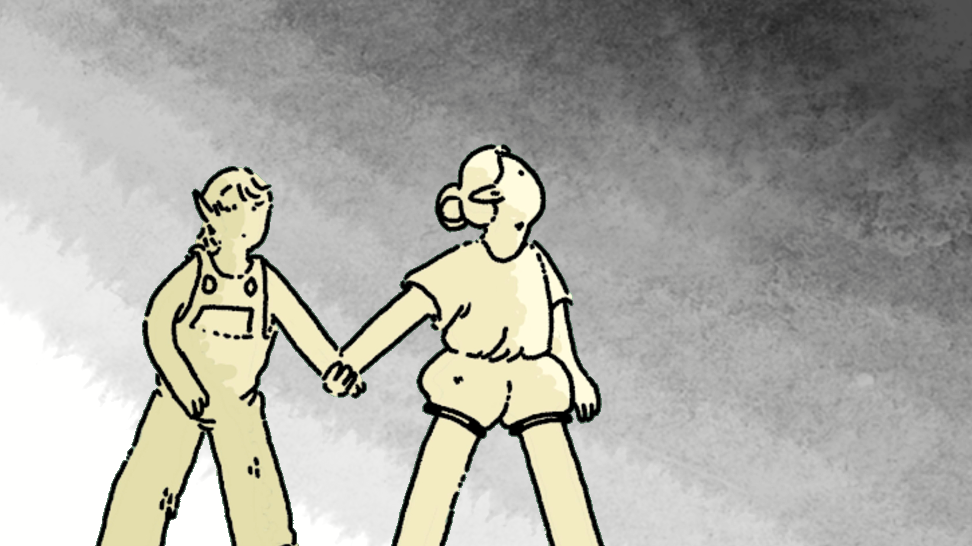
“Budding” by Asher Quinn
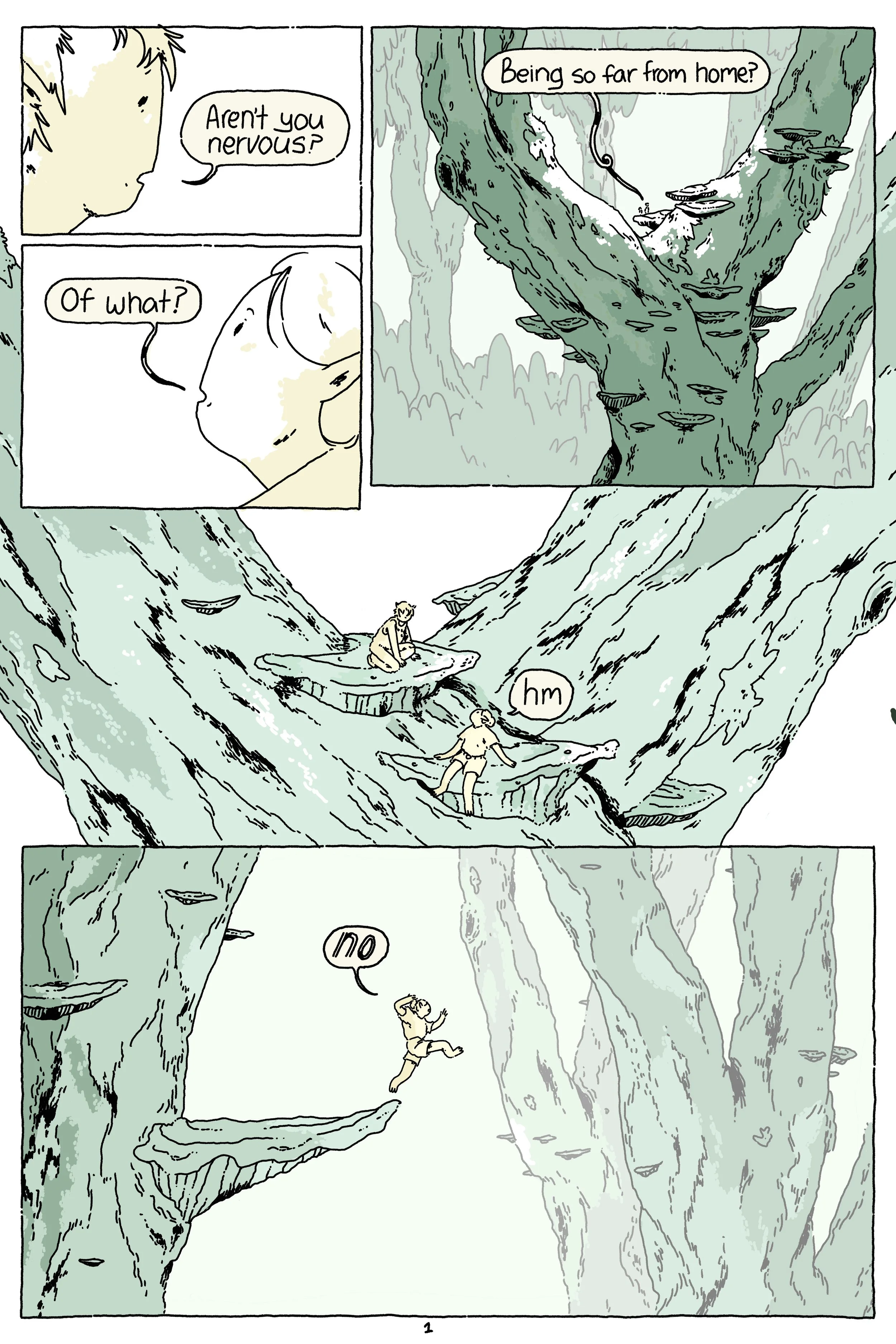
Aren’t you nervous?
Of what?
…
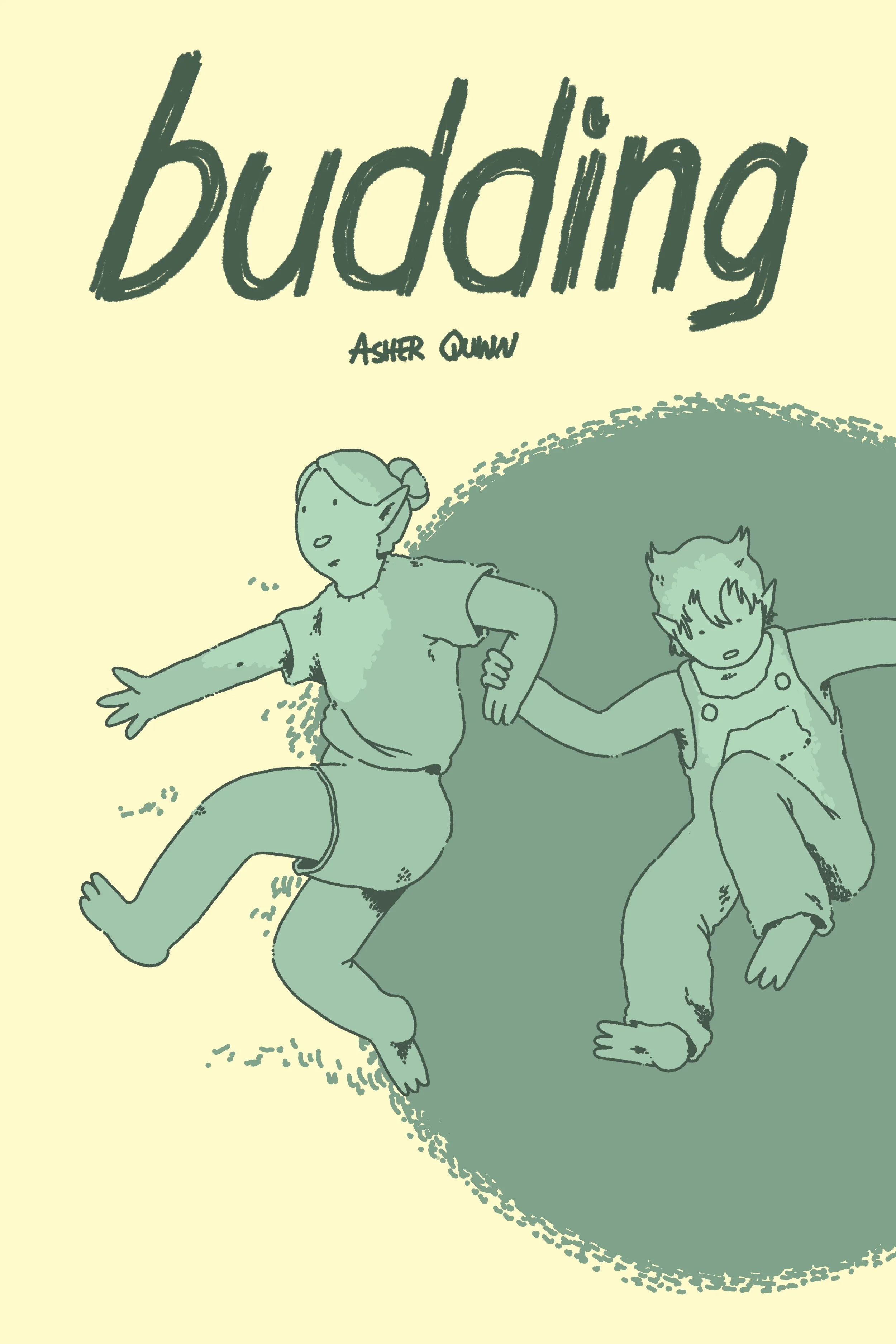
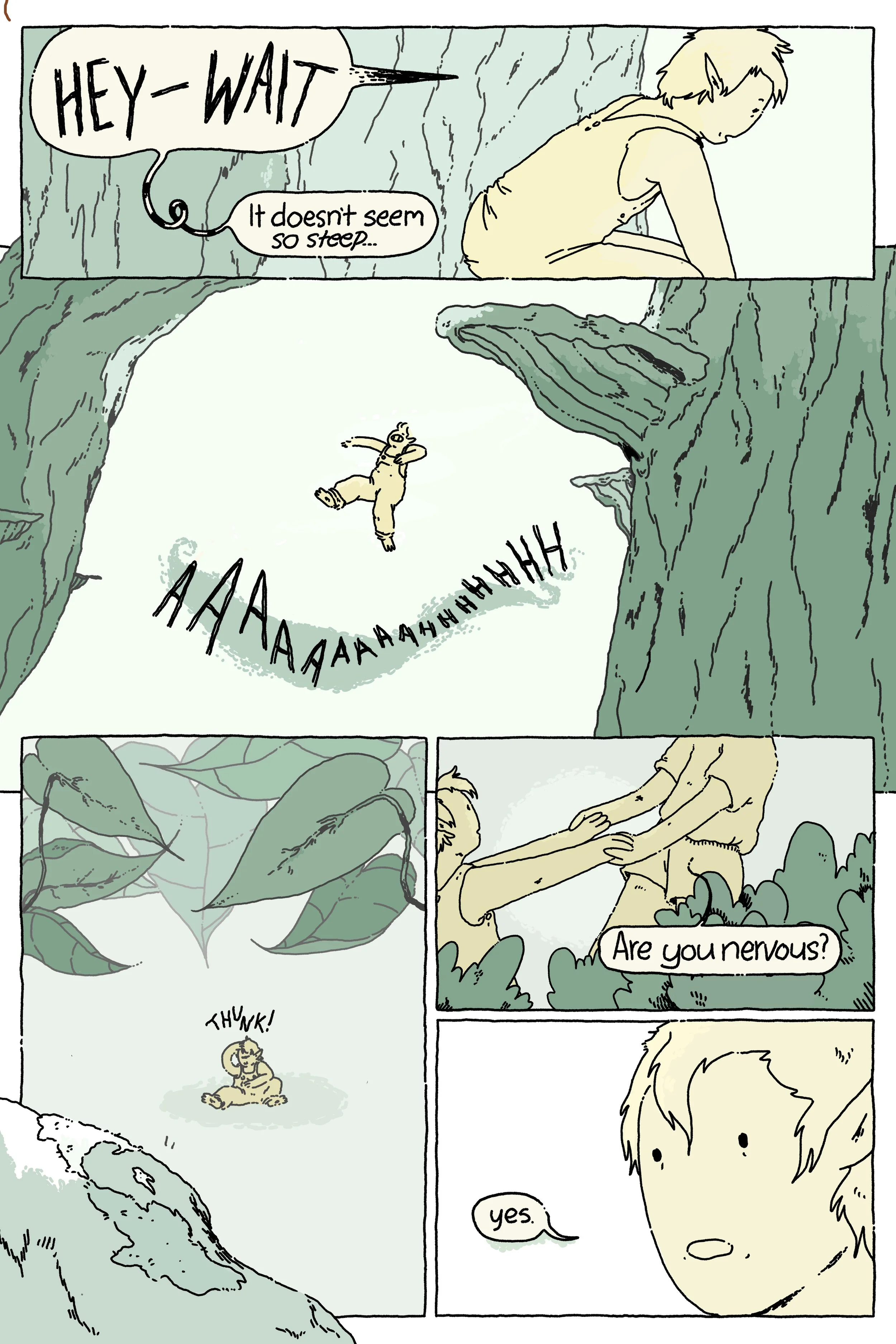
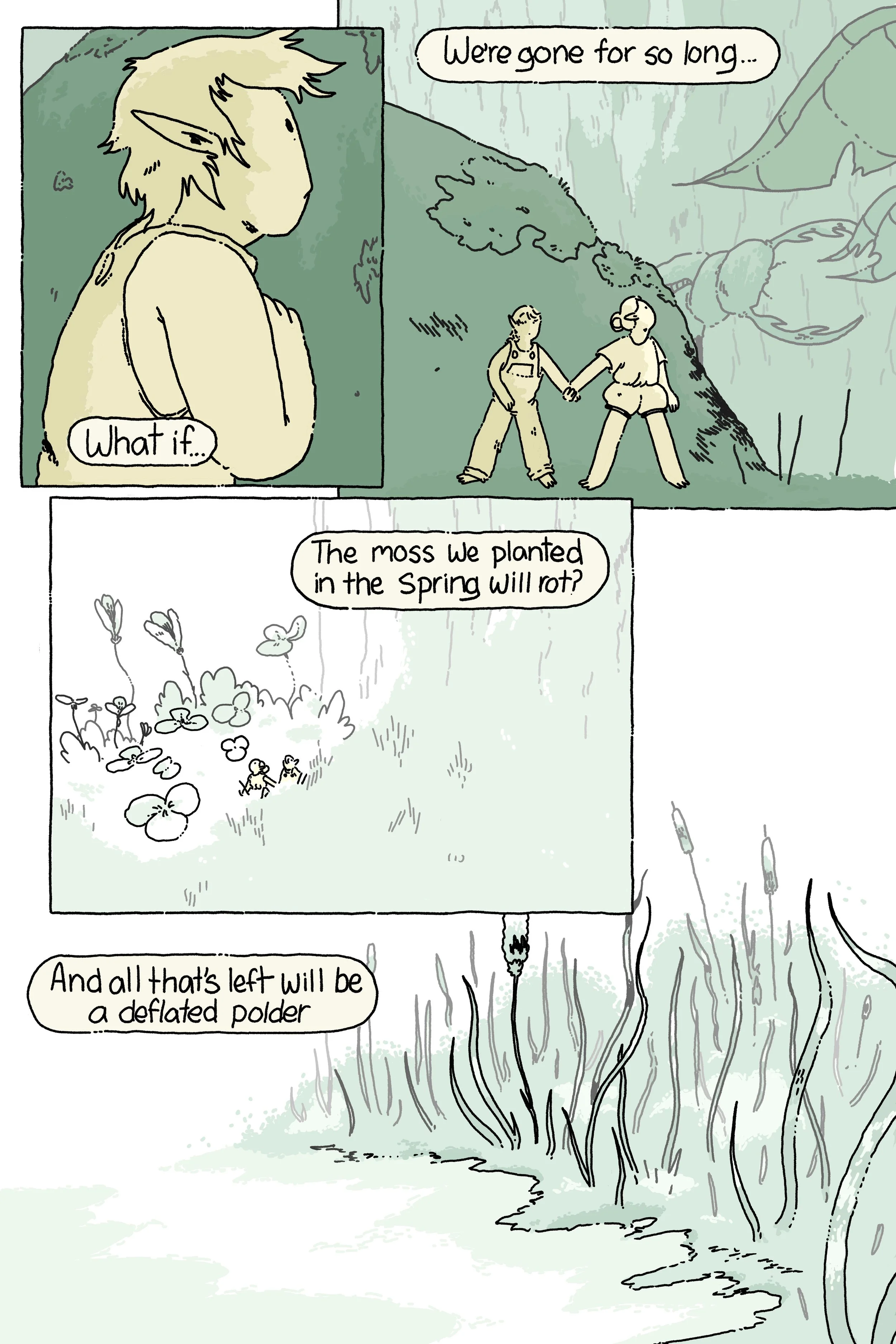
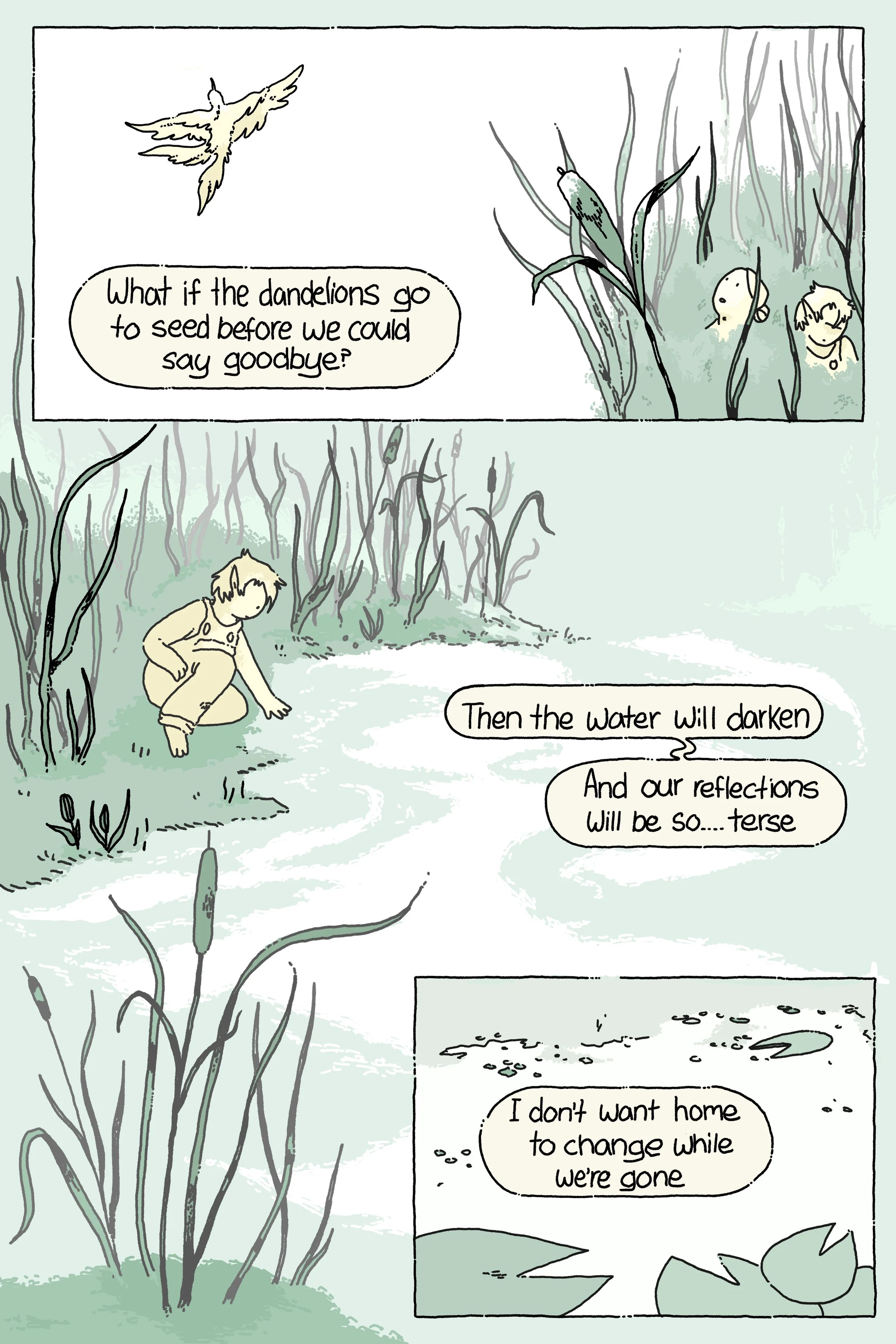
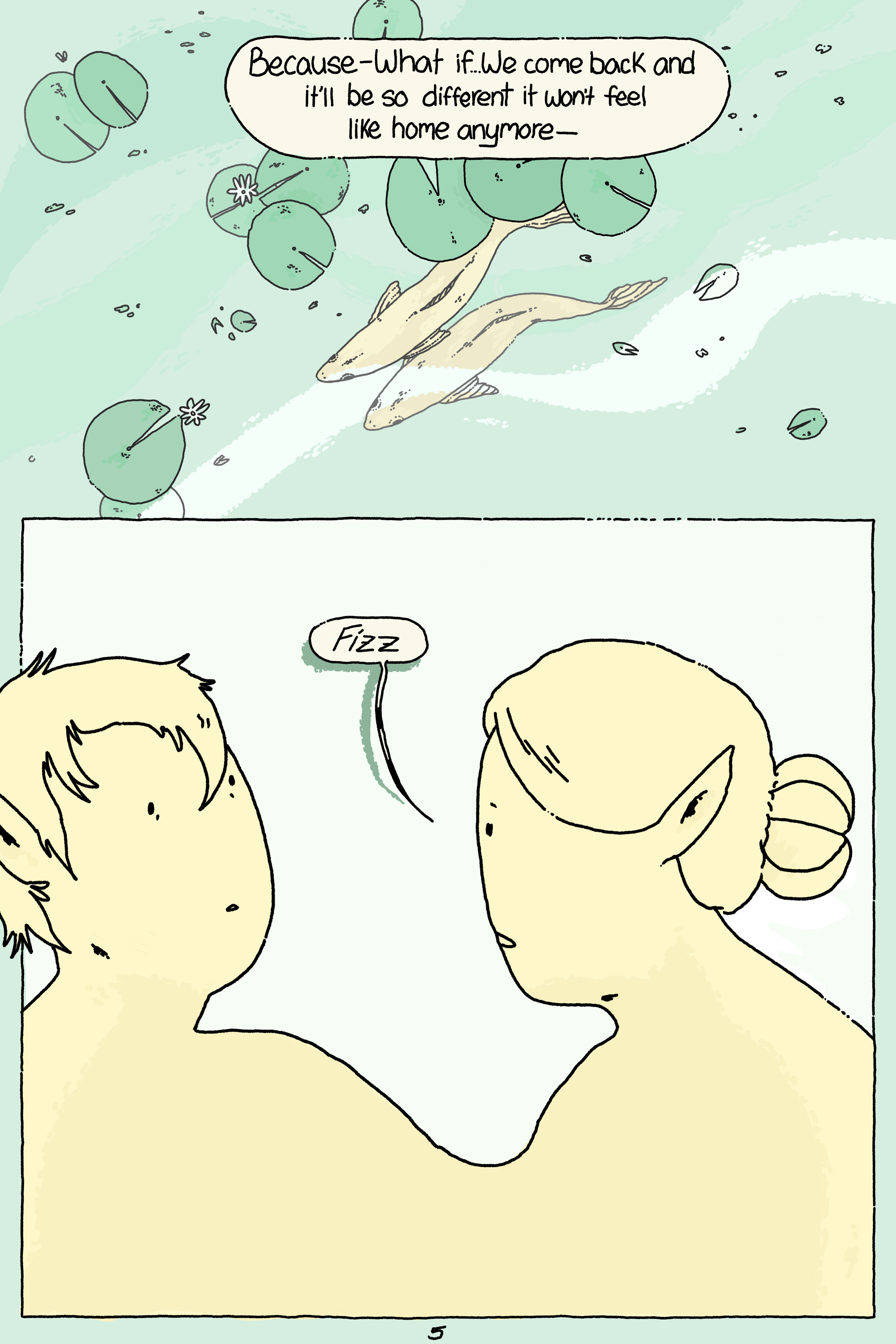
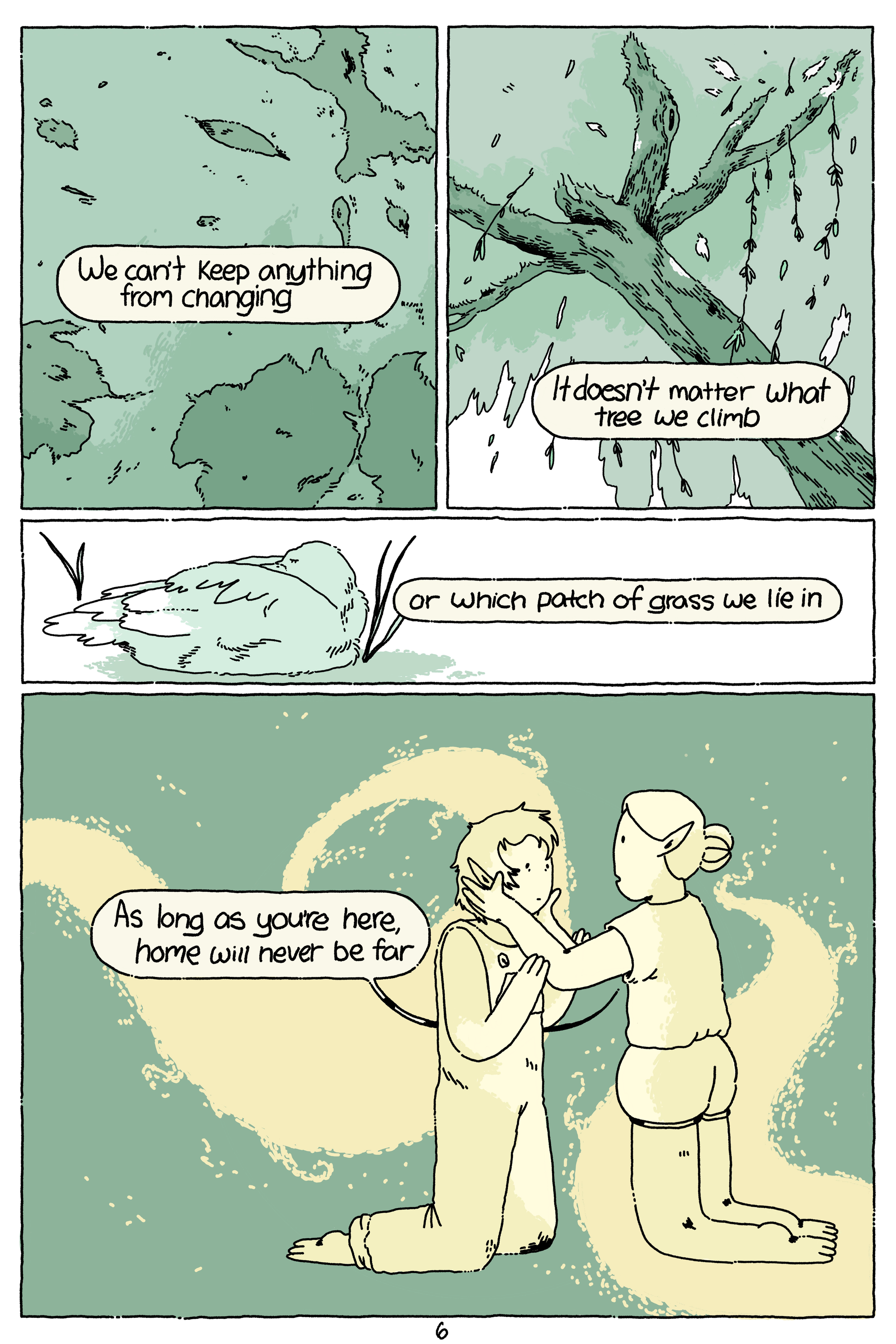
Asher is a cartoonist from Seattle. You can find her other works on her Instagram: @clampubo.

“All Seventy Dollars” by T. Dallas Saylor
Back when we were married, I couldn’t get it up, still a little red from the Ace bandage. …
Back when we were married, I couldn’t get it up, still a little red from the Ace bandage. How does it feel? asks the hawk patrolling the sun. I compliment its lace feathers, thin mesh, gold earring stud. Like an old Chevy’s rear window, I tell the hawk. Bigger models, collarbones boasting top brands, a black bed with vertical ribbing tied tight—I wander out into an evening too cold for May. We’d agreed to use the dregs, but how do I say I love it? Peel the straps & pronouns, patrol the elastic sand tracing the damp shoreline. I crave the water like a birthright. Meaning: make my body look like a body—please God, just for a few hours. The common mountains form immortal silence. My heart is no less cosmic.
Dr. T. Dallas Saylor (he/they) holds a PhD from Florida State University and an MFA from the University of Houston. His work meditates on the body, especially gender and sexuality, against physical, spiritual, and digital landscapes. He is the author of one poetry collection entitled Starfish, published by Glass Lyre Press in 2025, & his work is on Twitter: @dallas_saylor. He currently lives in West Virginia.

Two from Jessie Harrison
In Case You Missed It, We Aren’t Friends Anymore
And we were just friends—
Who posted each other on Instagram every day…
In Case You Missed It, We Aren’t Friends Anymore
And we were just friends—
Who posted each other on Instagram every day,
And texted each other goodnight,
Even when she kept bringing up that she saw my boobs
When I needed help getting into a hospital gown
When she took me to the ER—
And now we’re nothing,
And we don’t go to each other’s shows,
And she doesn’t read my poetry anymore,
And she’s just the flash of anger
When someone forgets to text back,
And the reason I don’t talk about the eating disorder.
I want to rip the butterfly clips out of her hair—
She used to say butterflies were my thing—
But we only knew each other for one summer,
So I need to suck it up and accept that butterflies
Maybe aren’t that special,
Maybe aren’t mine.
Your Language
He showed me photos in shoeboxes,
Filled with Shakespeare and Dickens and Shelley,
Photos of a mother who thought her son
A gothic hero, a handsome martyr
To sacrifice on the altar of her suffering.
You have a complex,
But your son isn’t Oedipus,
So he left his home for a postmodernist
Who speaks your language better than you.
And your pillow talk may be Hamlet,
But the Bible was the belt I beat myself bloody with,
And I can spot Abraham and Isaac anywhere,
Even if Isaac isn’t the type to pray,
And Abraham has blue hair.
You cannot call it love—
The way your house is heavy with duty,
How even the cat tiptoes around your tears,
And you cannot make him a monster
For growing past your demands and whims.
Jessie Anne Harrison (she/her) is a poet from Houston, Texas, currently located in Utah. She has an MFA in Creative Writing from Arcadia University and juggles writing with teaching and acting. Her poetry is rooted in grief, religious deconstruction, and the beauty of rebuilding. You can find a list of her previous publications in the "About" section of her blog, allthebestjess.wordpress.com.

“East Palestine” by Erin Jamieson
For one day, our town makes headlines: vinyl chloride invading modest single story homes.
I.
For one day, our town makes headlines: vinyl chloride invading modest single story homes.
Plumes of smoke invade the street where a breakfast diner once sold buttermilk pancakes.
We’re told it’s safe to return home. Neighbors report dead animals, lingering acidic smells in plaid sofas. We’re told to drink our water, but we cannot rid the taste of the smoke, of the headlines.
Some ask why we don’t just move.
As if we aren’t already struggling to buy groceries, to keep the lights on.
Soon, other headlines, other disasters erase the name of some rural Ohio town.
II.
Ethylhexyl Acrylate: a name that stings my eyes. I scrub my inflamed skin in the shower. I imagine it dripping into my morning coffee.
I close our blinds. I am in a hotel 100 miles away but I can still see the plumes of smoke. I imagine the two bedroom home I spent a decade saving for. The cracked laminate counters, the faucet that always leaks.
And the photos of my sister. Captured in eternal youth, a flower crown on her box braids as she steps across the stage of her college graduation.
I imagine her face being touched by the fumes. I imagine carpet being ripped out, imagine how the world will once again move on without our community.
III.
I stay in the hotel for a month, draining my savings. I write freelance articles until both my fingers and mind are numb. The numbness gets me through the day.
At night, though, the derailment happens over and over again.
Erin Jamieson’s (She/Her) writing has been published in over 100 literary magazines and nominated twice for both the Pushcart Prize and Best of Net. She is the author of four poetry chapbooks, including Fairytales (Bottle Cap Press) and a historical novel, Sky of Ashes, Land of Dreams (Type Eighteen Books).

Two from Frederick Pollack
For three years it wasn’t cold enough
to make a fire. Then it was, but when friends of ours
in LA lost everything, we didn’t…
Hearth
For three years it wasn’t cold enough
to make a fire. Then it was, but when friends of ours
in LA lost everything, we didn’t
want to. Fall this year
is ambiguous. I read articles
about the dissolving Gulf Stream, the descending
Polar Vortex. The iron box
beside our firescreen is piled high
with logs, twigs, cedar strips,
which must by now be very dry
and eager. Perhaps in February, perhaps twice
I’ll be able to indulge
that fancy—that the pleasure of
control has something to do
with what the fire itself
feels. What it would do
to us if it could. Knows it has done. Yet dies
quietly, calmly, the way we’d like to.
In Partibus
Perhaps the new revolutionaries would wear monks’ cowls,
and preach that only purity of means justifies the ends.
– Arthur Koestler, Darkness at Noon
At dawn I think of Kalief Browder, who served
three years at Rikers without trial
for allegedly stealing a backpack and who
hung himself two years after being released.
Helped by study and training, I imagine
as well as I can what he faced
and felt. Then extend my meditation
to the 150 stabbings
that occurred each month at Rikers, and the character
of its rules, staff, lawyers, water,
and roaches. Then, as is our practice,
I think of other places, more recent horrors.
Some of us call this prayer. It’s only memory
and attention; the aim is not
to release or depress, only to focus,
like a list of things to do in a day
that lasts a long time. Then I go down
to the shooting range, and one or another
martial arts class, and only then
to breakfast. Beyond the cleared
area, the guardposts and the wire,
the day as usual is filthy hot.
Citizens of this disputed, “purple”
region walk to what stores or depots
are open, what work they have, and either
make a great show of ignoring us or
ignore us. At one point our main building
was one of their churches. After meetings,
I enter what is truly now
a sanctuary. Two stitched and bandaged
women have been released from
the infirmary and wait, one with her kids.
There are also a battered youth, and some immigrants
who by the look of them have known hunger.
I’ll be here late, evaluating, offering
what comfort we have and initial placement.
There’s also a dude. I know he isn’t
packing but he may carry an engineered
virus, or plan to do
what damage he can with what he can grab.
Or he may actually have had
enough of the lies outside and now sits
looking blankly around, as much
without a settled home as the word freedom.
Frederick Pollack is the author of two book-length narrative poems—The Adventure (Story Line Press, 1986; reissued April 2022 by Red Hen Press) and Happiness (Story Line Press, 1998)—and four collections: A Poverty of Words (Prolific Press, 2015), Landscape with Mutant (Smokestack Books, UK, 2018), The Beautiful Losses (Better Than Starbucks Books, 2023), and The Liberator (Survision Books, Ireland, 2024). In print, Pollack’s work has appeared in Hudson Review, Poetry Salzburg Review, Manhattan Review, Skidrow Penthouse, Main Street Rag, Miramar, Chicago Quarterly Review, The Fish Anthology (Ireland), Poetry Quarterly Review, Magma (UK), Neon (UK), Orbis (UK), Armarolla, December, and elsewhere. Online, his poems have appeared in Big Bridge, Diagram, BlazeVox, Mudlark, Occupoetry, Faircloth Review, Triggerfish, Big Pond Rumours (Canada), Misfit, OffCourse and elsewhere. Website: www.frederickpollack.com.
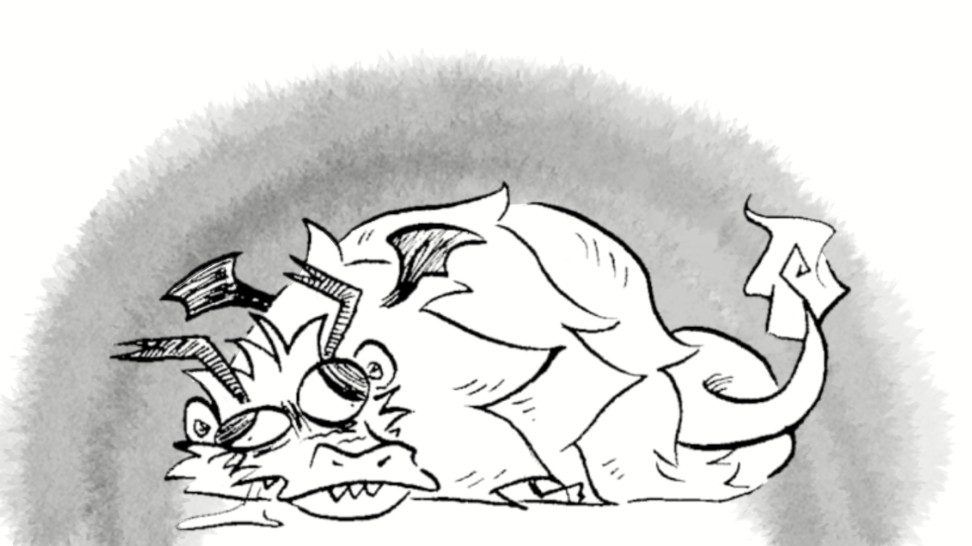
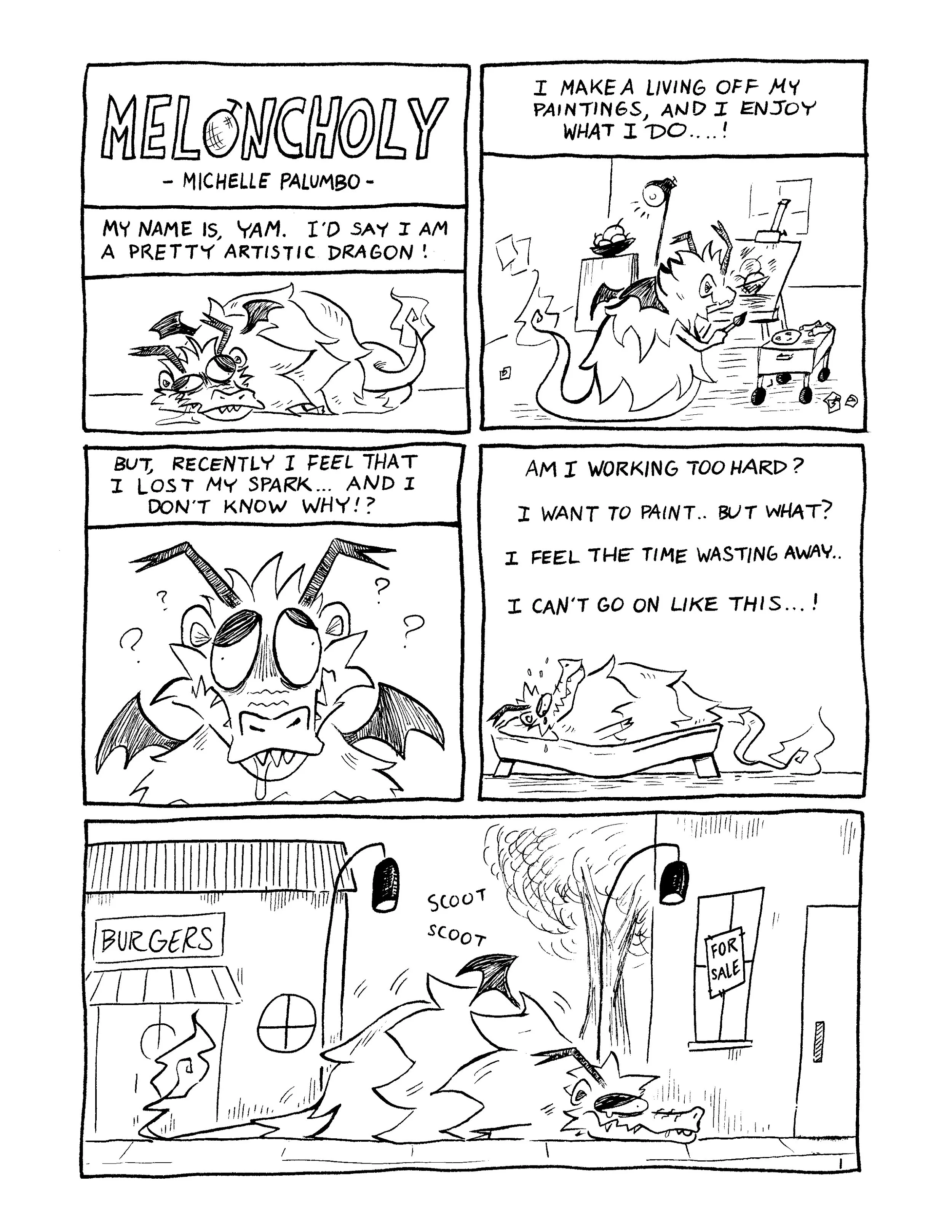
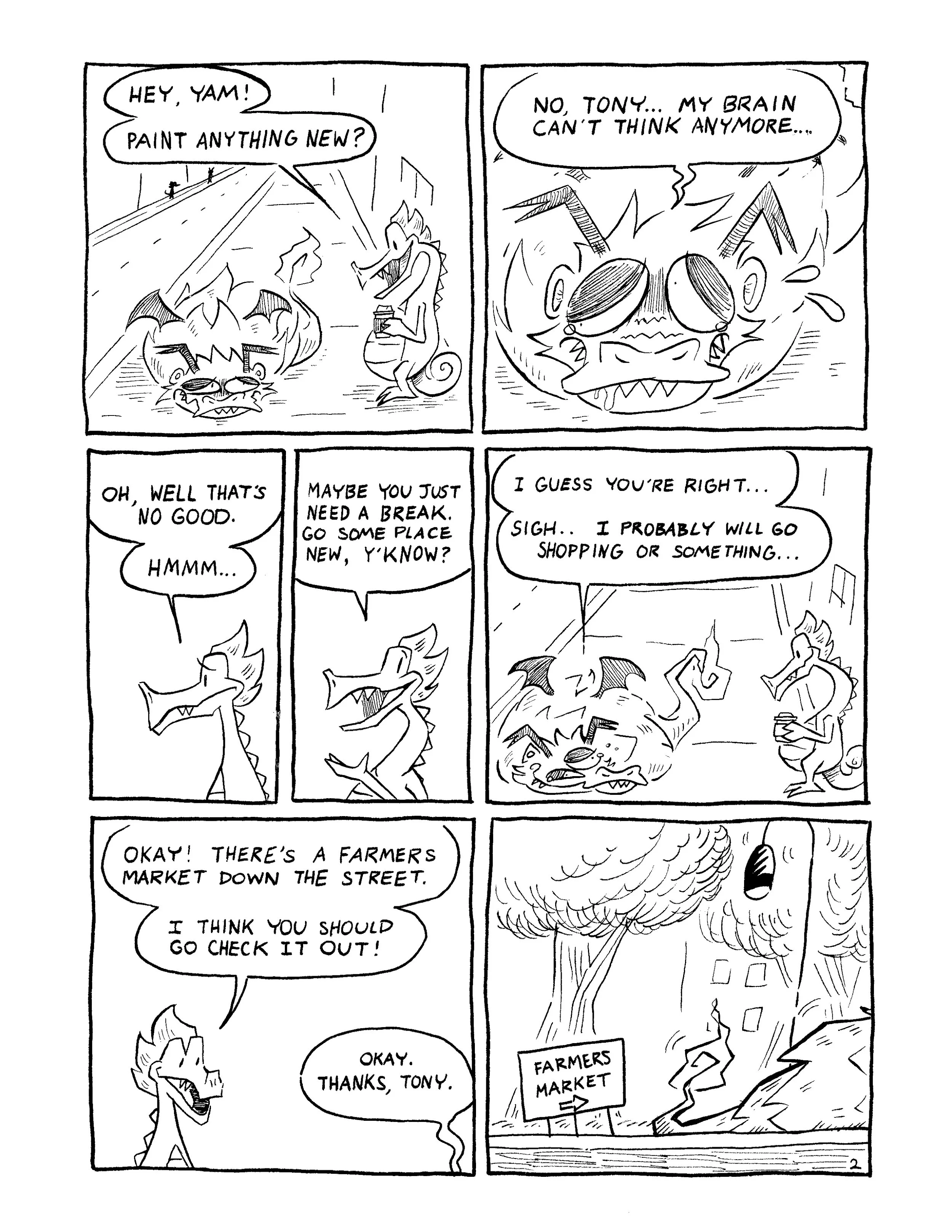
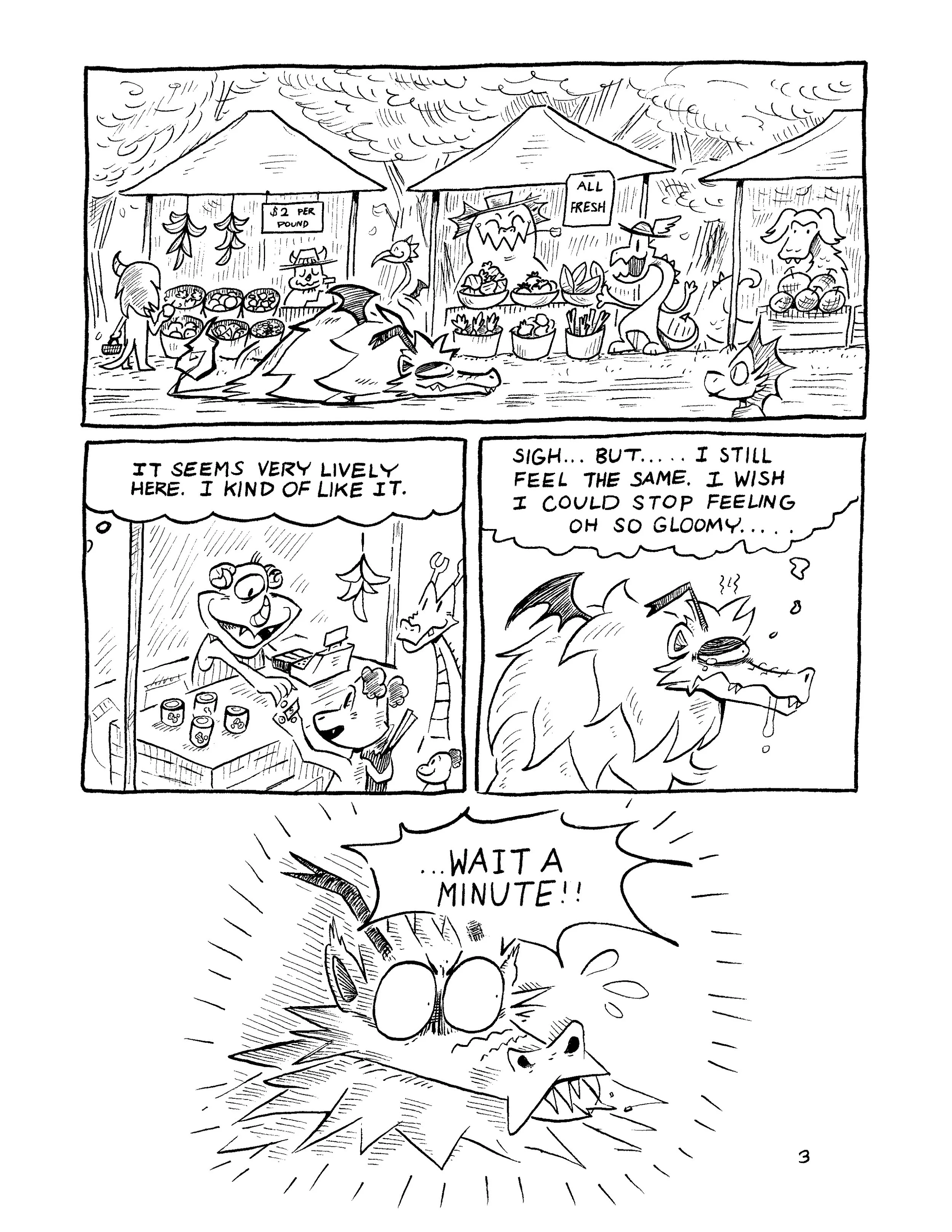
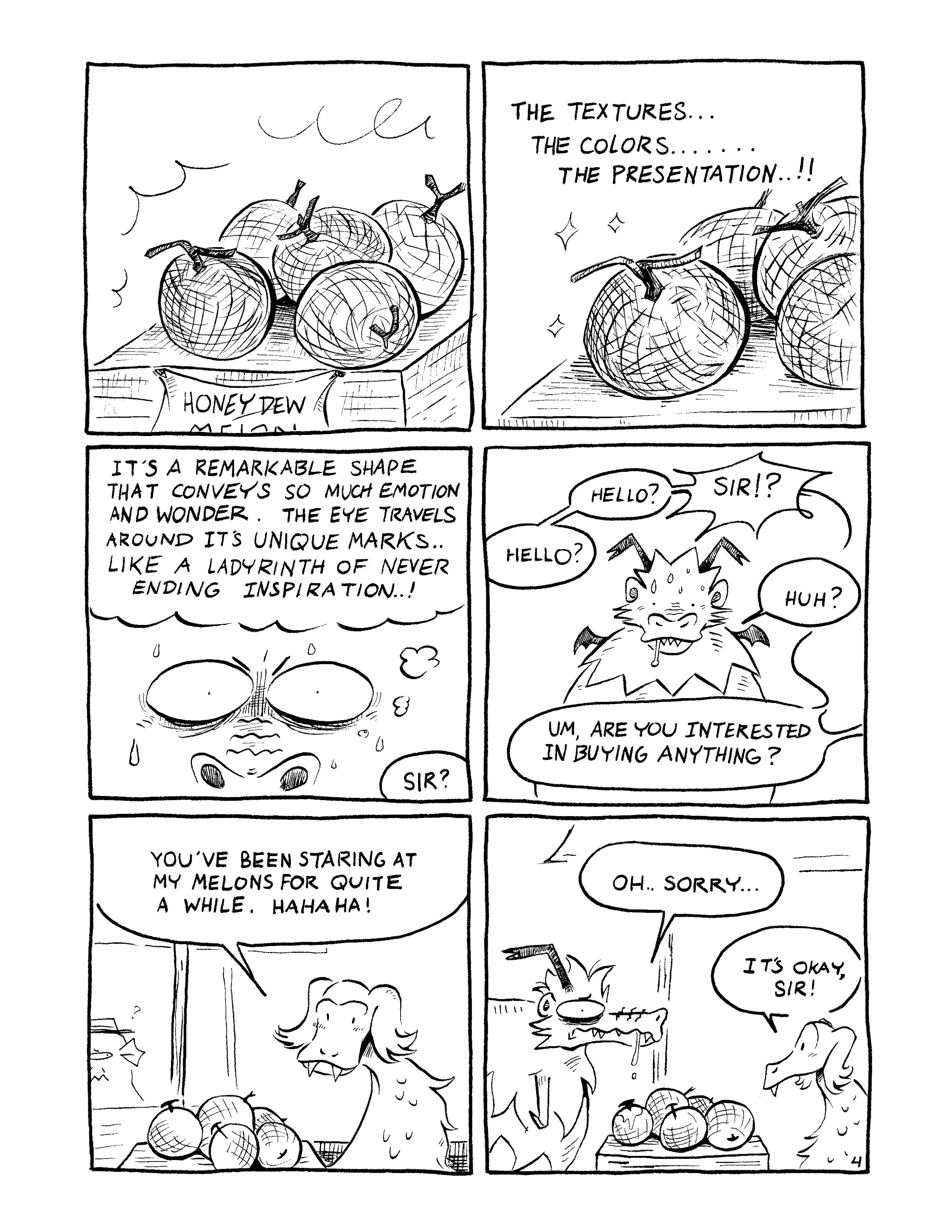
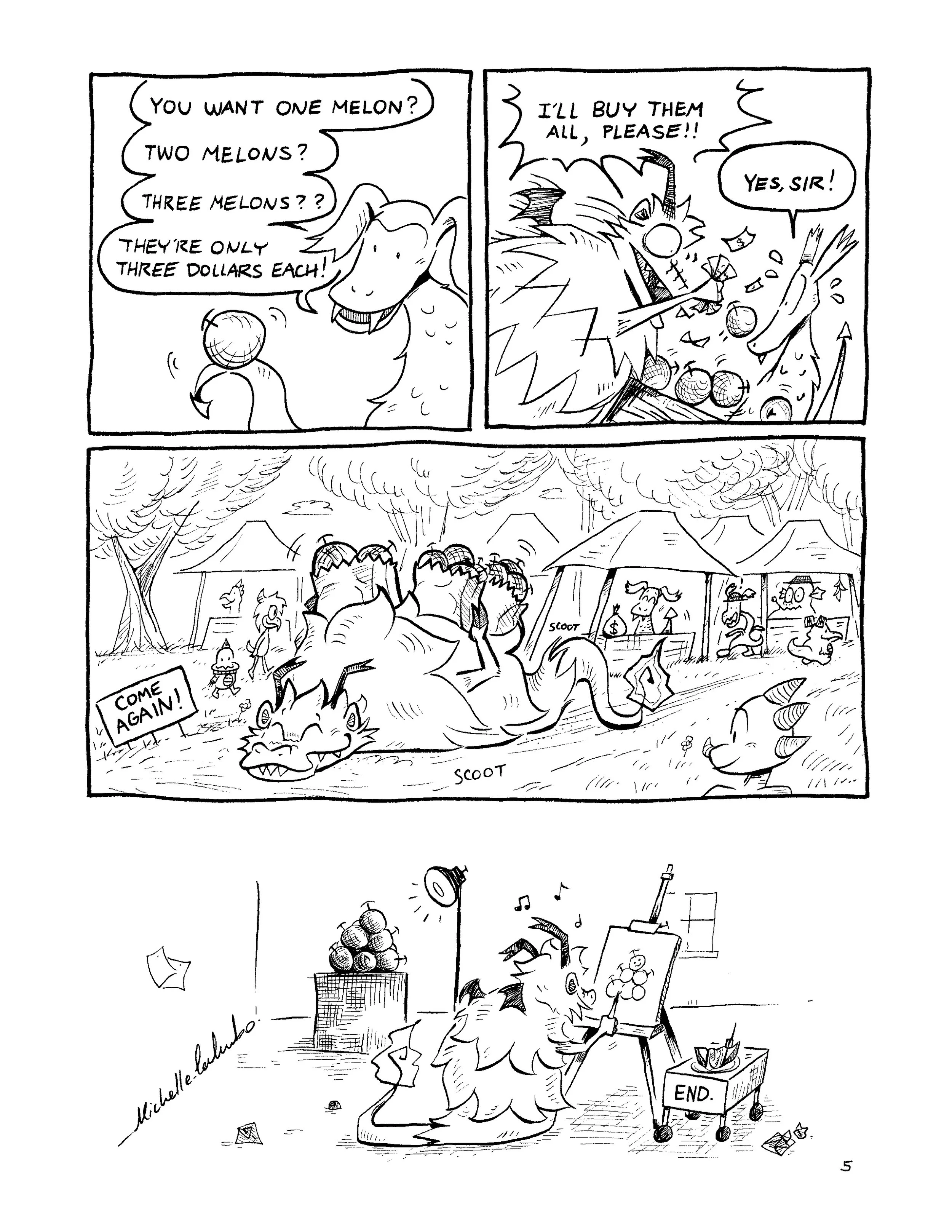
“Meloncholy” by Michelle Palumbo
My name is Yam. I’d say I’m a pretty artistic dragon!
Michelle Palumbo is a senior at Missouri State University, studying sequential art and design. She has been writing/drawing comics for more than eight years and has been publishing them (mainly) on her Instagram and Tumblr pages. Throughout her time in college, she was able to have her artwork and comics displayed at various shows from the Brick City Art Gallery, such as the Annual Foundations Exhibition and the Design + Image Biennial Exhibition.

“At the Concession Stand” by Nancy Byrne Iannucci
The small man at the concession stand
bounded off one countertop to the next.
The small man at the concession stand
bounded off one countertop to the next.
A trapeze artist couldn’t swing,
couldn’t hang like him—
they’d fall to the ground,
ensnared by cloudy circus air.
It was the summer of ‘78,
Grease is the Word, is the Word, is the Word
blared from his transistor radio.
He had a finesse I couldn’t stop staring at.
My roller skates were too tight,
but I dared not bend to loosen them—
I’d miss him. I was afraid he’d disappear
like Santa and one of his elves.
We kept watching him—my friends,
who were a few years older than me,
with combs in their back pockets.
They tried to keep their laughter in check,
but I knew this Puck-like creature could hear their snorts,
as he leapt and spun from hot dogs to Cokes.
I didn’t want it to end, but he gave us our change.
We skated back to my dad’s station wagon.
I was in awe, looking back not once but three times,
as my friends carried on about Three’s Company.
When we talk about that time back in ’78,
my friends often recall the summer heat,
Grease, and the hot guys
they met at the roller rink.
I remember this brave man,
who I believed rode home on a snail
and lived in a mushroom.
Nancy Byrne Iannucci is a writer from New York—her work has appeared in Thrush Poetry Journal, Allegro Poetry Magazine, Eunoia, 34 Orchard, Maudlin House, and San Pedro River Review. She is the author of four chapbooks and is a two-time Best of the Net nominee. She was also short-listed for the 2025 Poetry Lighthouse poetry prize. When she is not writing, she's roaming the fields near her home in upstate NY or playing with her three cats: Nash, Emily Dickinson, and Rocky—www.nancybyrneiannucci.com ; Instagram: @nancybyrneiannucci

“Moss” by Francis Walsh
Every time Jimmy blacked out, he left a corpse in his wake.
This was how Jimmy came to be known as Jimmy Corpse-in-His-Wake.
Every time Jimmy blacked out, he left a corpse in his wake.
This was how Jimmy came to be known as Jimmy Corpse-in-His-Wake.
On Tuesday morning, Jimmy awoke on a couch that was not his couch.
Jimmy knew the couch was not his couch, because Jimmy didn’t own a couch. Jimmy lived in a studio apartment and slept on a futon mattress that he kept on the floor, having long ago annihilated the wooden frame in pique of drunken fury over a missing clamshell take-out container of buffalo wings, never recovered.
Amid the splinters of the wooden frame, Jimmy had scowled and muttered: “Who ate my goddamn dirty wings?”
That the frame had yet to be replaced was a separate issue from its destruction.
Jimmy had not felt penitent; Jimmy had felt broke in the pockets.
Now awakening on an unfamiliar couch, Jimmy’s finger wistfully stroked the leather cushions cradling his body.
With a groan, he levered himself upright into the gray, early morning light, and discovered a spacious living room with bookcases built into the walls and a fireplace and a mantle. Fancy.
His ex-wife’s parents had been fancy enough to own a house with a fireplace and mantle.
Scratching his armpit, Jimmy attempted to unravel the knotty memory of the previous evening. He had started drinking at home, in the shower, the hot spray of water stippling his back while the beer cooled his belly. He had dressed—jeans and a hoodie—and walked down the street from his apartment to Rubella’s, whereupon he banged through the door and hollered for a basket of dirty wings and a beer and a shot.
Jimmy was a local.
He settled his bulk onto a bar stool as Joan Armatrading sang through the jukebox.
Love and Understanding.
He drank his beer and his shot, then persuaded himself to order another pair, lest one or the other drinks get lonely, or the pair, like a double date, a process he repeated until his sight blurred and fragmented into the nothingness of a Monday night blackout.
The events that occurred between the barstool and the couch would be a matter for forensics.
Meaning: Jimmy Corpse-In-His-Wake may have to reconstruct timelines, canvass witnesses, and employ his faculty for deduction.
Or else just follow the trail of bodies.
Over recent months, Jimmy had become adept at reconstructing the blacked-out portions of his life by checking his credit card purchases, which created a tidy narrative of his movements. Not that he roamed far, but it was good data for a damaged memory.
Jimmy felt everything was about data and metrics these days. From individual human performance to Uber and Yelp reviews to Draftking parlays, it was as if the nerds of the world had squeezed existence onto an Excel spreadsheet, which was probably how the geniuses at the insurance company had come up with a Corpse Rating, similar to a credit rating, but for all the discarded corpses.
Whenever Jimmy called to complain about his rating plummeting, the insurance company reminded Jimmy that he wasn’t the only one.
“Other people manage these things as well. We have assistance programs. You’re not alone, sir.”
“Yeah, well, it sure goddamn feels like it.”
Other fancy accoutrements adorned the living room in which Jimmy Corpse-in-His-Wake awoke. Jimmy’s shins butted against an antique, plinth coffee table, marble, atop which sat a coaster and an unopened bottle of spring water: a gracious host. Jimmy grabbed, twisted, guzzled. Light crept in from a bay window to Jimmy’s right, lifting the gloam in the room to reveal further furnishings—a second couch, a bar in the far corner, an enormous flatscreen, and paintings that appeared to be real and not prints, although Jimmy didn’t know what that meant from a financial standpoint, aside from excess.
Pictures adorned the mantle above the fireplace, but the light was still too dim to make out any shapes in the images. Gray blobs in the darkness. Jimmy crumpled the water bottle in his fist as he drained the last few drops.
Whose fucking house was he in?
Not that he bought a lot of drugs, but all his drug dealers lived in shithole studio apartments with tiny yappy dogs that dropped turds all over the carpet.
He searched for clues, but upon the coffee table, he saw no bong, and no cigarette burns eyed him from the upholstery.
This was a well-kept room.
In his more charming years, Jimmy had some success with one-night stands, and while he had often bragged about punching above his weight, he had never struck as high as this living room suggested.
Whoever lived in this house probably had a high paying job, like his ex-father-in-law, Coop, who had been a CFO, and who, actually, Jimmy realized, owned the exact same curved floor lamp with the domed, brass shade that just now burst into life and blew out Jimmy’s peepers.
“All right, Jimmy,” Cooper said, “You gotta get out of here. I didn’t want Lorraine to find you, so I’ve been sitting in the kitchen, waiting; you can exit through there. Use the half-bath if you need. Quietly. There’s cash on the table.”
Jimmy squinted. Coop had always been reasonable. He even looked reasonable, swaddled in a silk robe, his mustache trimmed to a calming straightness, looking like the most efficient push broom in the universe.
Coop reminded Jimmy of a Richard Yates novel. Coop riddled his dialogue with semicolons, colons, and all manner of exotic punctuation. No one spoke with semicolons anymore.
Jimmy rose from the couch to leave, ready to thank Coop for his hospitality and then skedaddle, but hungover and vulnerable, and perhaps still drunk, Jimmy blurted out an apology he had made hundreds of times in the past year, regarding an event he would forever wish had never occurred.
“I’m sorry. I didn’t mean to, Coop. It was an accident.”
Jimmy didn’t know how Coop did it, but he could make a stern sigh sound sympathetic, and right then Coop gave a most sympathetic sigh with the sternest of sibilance.
“I know it, Jimmy, more than most;—but the accident wasn’t the only issue: it was the drinking; leaving your soiled corpses all around town; pawning Nana June’s jewelry to buy whatever goofball pills you were ingesting. Heirlooms!”
“I can get the jewelry back if you think it would help.”
Coop laid a heavy hand on Jimmy’s shoulder as Jimmy passed.
“No, Jim, I don’t believe it would,” Coop said. “Take care to help yourself, and you’ll help everyone around you.”
Jimmy shuffled to the end of the hall, glancing over his shoulder once to catch Coop as he dragged Jimmy’s corpse from the couch toward a closet door beneath the stairs.
“Goddamn, heavy sumavbitch,” Coop muttered.
Outside on the stoop, Jimmy spotted another corpse sprawled on the lawn, facedown, ass up. As far as Jimmy could remember, he was living in the first week of September and he hadn’t seen a frost yet. He puffed out a few breaths and saw no vapor.
So at least the corpse probably wasn’t frozen to the ground, like that one time when Jimmy had unsuccessfully attempted to melt his face with a book of matches and a shitty $4 drugstore candle.
He sighed and trudged over. He considered hoofing it down the street and leaving his body, but Coop was too old to be moving around one corpse, let alone two. And it wasn’t like Jimmy didn’t know where Coop kept the trash bins.
Jimmy grabbed his corpse by the ankles and dragged himself toward the side of the house, where two large flip-top wheelie bins rested against the attached garage.
Halfway, Jimmy stopped, heaving for breath and dropped his ankles.
Christ, no wonder I’m dying so often.
The wear and tear was visible on his dead face: the slight bloat from the alcohol, and the minor, incremental advances of time and gravity that pulled at his skin, and he wondered if he might ever return to who he was, but in the meantime he buried his corpse in a garbage bin.
After depositing his corpse, Jimmy began the trek home. The world brightened with the sun and Jimmy listened for the birds.
When he took a left from Caldwell onto Brighton, he was immediately confronted by a car crumpled around a lamppost.
His body had plunged through the windshield and was now sprawled across the hood of the car.
“Hey man, wait a minute. I can move that. I can move that.”
The cop turned. Young and round, a brief look of bewilderment crossed his human face before he squashed it down and gathered the commands of his cop persona.
“Sir, is this your corpse? It is illegal to abandon your corpse within city limits. You need to set your corpse out in city-issued Corpse Containers. I’m sure you’re aware of the recent ordinances and public pressure to reduce the number of corpses on our street. Now, you don’t look like our typical problem, homeless IV drug users. So I’ll cut you a break and won’t cite you for the abandoned vehicle.”
Jimmy nodded, despite not thinking it was much of a break.
Some big person up top was also shitting on some little person down below, and Jimmy was part of that chain and all he knew was he wasn’t anywhere near the top, no sir. He always hoped to be proven wrong.
Jimmy accepted the ticket from the outstretched hand of the cop.
“Now Jimmy, according to our records, you have two other unpaid tickets for corpse abandonment. If you get another, the state will put out a warrant for your arrest. I advise you to pay those fines posthaste. You take care and watch yourself, ok, Jimmy?”
Yeah, I’ll be watching for assholes like you, Jimmy thought, then headed toward Rubella’s for breakfast and a beverage, something to bolster his spirits now that the world had seemed so fit to crush them.
Jimmy’s mouth watered with thoughts of washing down some fried eggs with a beer-and-tomato-juice cocktail. A slight bounce emerged in his step.
Take the edge off with that beer. Maybe two beers. Then head home, rest up. Get this sorted tomorrow.
He shoved his hands into his pockets.
Just one to smooth out the rough edges, he told himself.
Just one.
Jimmy hadn’t expected to be released from jail so quickly, but that was only because he hadn’t expected Coop to answer the phone.
After accepting the ticket for abandoning his corpse, Jimmy Corpse-In-His-Wake went to drink his beer. Hours later, he awoke in restraints, with no memory of the intervening hours, so he was alarmed when Coop asked:
“Why on God’s green earth would you throw a cinder block through a fire truck windshield at 1 AM on Wednesday night?”
Wednesday? Hadn’t he just seen Coop a few hours ago on Tuesday morning?
Still, Coop didn’t seem angry when he spoke, more perplexed and disbelieving, as if throwing a cinder block through a fire truck windshield was akin to some generational or cultural divide, like septum piercings or a desire for universal health care.
Coop sat opposite Jimmy in a booth at the Friendly Toast, a regional chain of breakfast diners. The color and spray of rock and roll paraphernalia was so bright Jimmy wore his sunglasses at the breakfast table.
A Joan Armatrading song burbled in the background.
You say there's peace in sleep, but you'll dream of love instead.
Stephanie Espisito, esq., sat beside Coop.
“All right Jimmy,” Steph said, “here’s the skinny. Any threats carried out against agents of the state carry hefty penalties, particularly against firefighters. The public loves firefighters. They save cats and lives, don’t carry sidearms, and have a reputation for sex appeal.”
Coop pursed his lips, pushing his little gray mustache up and down.
“Hard to argue with the ferocity of public opinion.”
Jimmy looked up from his milky coffee and into the expectant faces across the table.
“I don’t understand. I mean, I can’t remember. Why would I do that? Was there a fire?”
Coop and Esposito glanced at each other.
“That’s the good news,” Coop said. “There was a fire and you called the fire department.”
Jimmy nodded his head at the mention of possible heroics.
Not all heroics required redemption, but redemption required a heroics, so reasoned Jimmy.
He was quite tired, that morning and forever.
“Judges love a good Samaritan,” Esposito added. “Neighbors helping neighbors. And in the video footage, it’s clear that you threw the cinder block to get the attention of the responders, not to hurt them, because they were nowhere near the truck.”
“Except the engineer. But the water panel is near the rear of the truck. Same argument. Plus, you yelled, ‘The fire is over here you’ blankety-blanks before you threw the brick.”
Brick? “I thought you said I threw a cinder block.”
Steph shrugged.
“We’re going to see if we can get away with calling it a brick in court. It’s about perception. We’re going to frame this as a wake-up call. You were drunk and overreacted, but only because you were concerned for the safety of the public. The fireman had exited the fire truck but then headed in the wrong direction, unable to locate the fire.”
“On account of the miniscule smoke,” Coop added.
“So it’s arguably clear you didn’t intend to hurt anyone.”
Intend to hurt.
Jimmy had heard that before.
Jimmy clenched his eyes shut. His lids throbbed. He wasn’t sure if he had dozed off. His palms were clammy and damp against his cheeks as he held his face in his hands. He sobbed.
“I miss him so much, Coop.”
“We know,” Coop said. “I know. Listen to me, Jim. I know you didn’t mean to hurt him. I know it was an accident.”
“But that was only a part of the problem. The corpses, Jim. You tripped over the corpses. You hadn’t been taking responsibility. The drinking, that’s a disease. We all have plenty of reason to be upset with you, but the addiction isn’t the reason.”
Esposito said: “To paraphrase David Lee Roth, it’s not the cocaine that will make you go broke, it’s the checks you sign when you’re high that will.”
Coop shook his head. “He doesn’t know what a check is.”
“Do you think Lorraine will talk to me?”
Coop shook his head.
“Jim, you gotta leave Lorraine alone. She’s not responsible for you. You’re responsible for you. Lorraine knows what happened. If she blames you, you can’t control that; if she hates you, you can’t control that. She probably doesn’t want to relive the moment.”
Esposito waved the waiter down.
“Kids, never wanted them, never will. Amen.”
Coop turned to Esposito.
“Kids? We’re talking about a cat. Fur baby.”
The best part of the sober house was the yogurt.
Years of drinking had annihilated Jimmy’s interior.
The yogurt cooled the red raw lining of his gullet. He wondered if the appearance of the yogurt had a psychological effect: the yogurt looked like a salve.
The house manager didn’t keep a large stock, so Jimmy felt bad when he used his forearm to sweep the collection of yogurt from the refrigerator shelf and into a shitty black backpack with a broken strap. The yogurts tumbled together as he ran out the door.
But the shame of his next theft overshadowed the shame of his yogurt transgression: Jimmy crept back into Coop’s house and stole a binder full of baseball cards.
Coop had a collection of sports memorabilia for every New England sports, including a scrap book of clippings from regional newspapers reporting on high school games.
Coop caught, Jimmy, obviously.
Coop displayed his favorite collectibles in his office, a bastion of leather and wood. He stood in the doorway, his finger on the light switch, the shadow in the hall creeping at his back.
“Life is a game, Jim, but not in the way one might expect; coaches advise players to play to the whistle, but the game never ends with the whistle. There’s always the season to consider. Conferences. Championships. Next season. You see, Jim. It’s about playing the game. Not winning. Playing. You’re playing to the whistle right now. What are you going to do next game? Next year?”
Jimmy knew fuck-all about sports. He paused with his hand on a binder while he listened to Coop. Jimmy had left the halfway-house sober, and in the haze of his memory he recalled feeling justified, as if he were making the right decision, but now, confronted with Coop’s words, the reason for his leaving felt remote and unclear: what was he moving toward?
Could he ever escape himself?
Jimmy had his doubts, along with a history of doubt others had gifted him, words and looks of doom that had cast Jimmy as a lost cause.
Jimmy opened his mouth to apologize to Coop, but he paused.
“I always loved you, Coop.”
“This is about goddamn human compassion; this is about being a good citizen and a good neighbor: you don’t need to love me, damn it, you need to get better and know that you are loved.”
The tears Coop shed rolled along the upper ridge of his mustache before dribbling down his chin, and he sobbed as Jimmy ran away, again.
Jimmy sold the binder of cards to a stranger for a few hundred dollars. They met outside a shuttered Joann Fabrics in a Scarborough strip mall. The O was missing from the store sign. Jimmy had taken the Metro and arrived early. He paced beneath the covered walkway as a light rain fell.
Wet blacktop glistened.
The stranger pulled up in a cargo van, but not close enough to the curb, so Jimmy had to step into the rain while the stranger leaned outside the window.
The stranger whistled.
“I really feel like I’m ripping you off.”
Jimmy shrugged and held out his hand for the money.
As Jimmy walked away, the stranger yelled: “Hey, man, you forgot something. It’s leaning against the wall. Doesn’t look good, dude.”
Jimmy kept walking.
After a few days in the woods, Jimmy had enough corpses to build a shelter.
With the money from the baseball cards, Jimmy had filled his backpack with cans of baked beans and a sack of potatoes. He followed the Penobscot River into the remote interior of Maine.
In his arms, he cradled a case of Poland Spring Vodka.
Wet leaves clung to his shoes. He ached.
He was unsure of how long he walked, but he stopped when silence crept between the murmurs of the trees and the movement of the birds and the animals.
He drank.
As the corpses accumulated, Jimmy experimented with different arrangements (face-to-face, back-to-back, side-by-side) and eventually constructed three sturdy walls to form a triangle.
“Isosceles,” Jimmy said, hands on his hips.
The two walls of corpses meeting at the vertex angle had been arranged so that their hands clasped. Jimmy arranged some brush and fir tree limbs to create a roof for the shelter, then unclasped the hands and crawled inside.
Back in society, the required disposal of corpses meant Jimmy often didn’t spend much time with himself. Now, alone in the woods, he could witness the various stages of his rot and decrepitude as light filtered through the canopy and into the tomb he had created.
Surrounded by himself, he dreamt he was moss.
Francis Walsh is a writer from Portland, Maine. Their work appears in the Chicago Quarterly Review, PRISM International, Split Lip, Harpur Palate, and elsewhere. They are the editor of SCRAPS.

Two from Tama Cathers
Many think of witches as scary,
and wise women as calm;
but they are cut from the same cloth. …
Underworld Trips for 39 Dollars
Many think of witches as scary,
and wise women as calm;
but they are cut from the same cloth.
Perhaps one is new, fresh with harshness,
while the other is oak-barrel-aged mellow.
The witch, while she may be cheap white tequila,
knows the way to the underworld.
She'll take you down on a tour:
for $39 per person, she can
show you the scary, the dark,
and the wild.
You're not likely to die,
and will return with a story,
but your life—unchanged.
The wise woman is old cognac, bottle mostly empty.
She walks paths
knowing the ways of the underworld,
the friends and the medicine.
She goes because she goes.
Even without you, she goes
She feeds the moon moth and fairy lights,
On foxfire, smuggled moonlight, and moxy.
In the dark, she goes
to sit with the knurled trees
as they leak black ink, while they mourn.
She goes to the cave that bleeds
never-ending dark into the night.
She offers it her plain black stone,
which she'll bring back home;
dark and still bleeding.
If you are stuck in the upper world
In a nightmare, or stuck half-below,
rather than point and call her scary—
call to her,
so she might find and deliver you home.
The Wolf Queen
I am the Wolf Queen,
who teaches her cubs these lessons.
She, who frightens her young
into their senses—
so they do not roll
mindlessly,
through the clearing,
tumbling
to lie
feet up,
panting, and giddy with pleasure,
as the badger circles in the shadows.
Tama Cathers is a poet whose work explores transformation, descent, and the absurd conversations that happen in liminal spaces. Her background in field biology and veterinary medicine brings observational precision to poetry that threads between the physical and mystical. She has worked studying crocodiles, black bears, and red wolves. Her poems appear in The Cereal City Review, the Westminster Arts Festival, and she was a runner-up in the 2025 Ned Foskey Poetry Contest. She lives in Kalamazoo, Michigan.

Three from Christie Beckwith
Let’s play a game called gardens and graveyards.
The only way to see what grows is to bury it…
Bury the Elephant
Let’s play a game called gardens and graveyards.
The only way to see what grows is to bury it.
I’m thinking about the dash on a headstone,
the vapor that betrays a living breath in winter,
how a mouth can be both a cradle and a casket,
The most critical job goes to the tongue
what it offers, the comfort it withholds.
Ashes or dust, the ground after rain smells familiar.
Is this why we call the earth our mother?
Does her silence swallow you, too?
I Drank a Yard at Mario’s
were the words on the T-shirt my mother stole
from a free meal with a porn stache.
The shirt became a staple in our wardrobe.
Its yellow plastisol letters cracked like lines
on the road after years of shame walks.
There is no shame in a woman figuring out who she is
through the lens of what she does not want.
I pretend this is true for the sake of poetry.
My mother traded her childhood
for her womanhood, but that’s a different poem.
She found escapes better than whiskey
at the local bars. Bottled up,
Hobo, Gary, and Bob—her weak-knee trinity—
of muscles, mustaches, and mullets.
Alan Jackson could have been my dad.
I pretend this is true for the sake of poetry.
A mother and her oldest daughter are often cut
from the same cloth. Her clothes start to fit
as the fabric blends between them.
We are a cross-stitch of child and parent—
too similar to see what is best
and too different to fit into the threads between us.
As much as I want to look like her, I’m just a girl
trying not to shrink.
There is no need for her to tell me she is proud
of how I’ve stretched into new and vibrant colors.
I pretend this is true for the sake of poetry.
True Story of Lost and Found
My mother has this picture of me
napping in a wooden toy box
in metallic blue tights.
I’m surrounded by my Bedtime
CareBear, My Pretty Ballerina, Raggedy Ann,
and a troupe of naked Barbies.
Somewhere below me, my brother’s
Metallica tape is lodged
in the back of my Teddy Ruxpin.
I awake one night on an impulse
to leave. I don’t know why—
Curiosity? Stupidity?
I pack the essentials—
clean underwear, socks, and
my favorite action figure.
She-Ra does not go gently into that good
bag. She rustles the plastic.
The noise wakes my brother.
He commands me to go back to bed.
I thought I wanted to understand the magic
of a streetlight stabbing the dark.
But in this moment, being afraid
of my brother protects me.
I’m too young to understand
reverence for a savior, but not too old
enough to lose one.
Outside our window, the crickets trill
to the bruised night sky.
I will find other ways to run.
Christie Beckwith is an author, poet, and freelance editor at Meraki Press. More importantly, she is a sparkle girlie and an excessive consumer of Dunkin's coffee. You can find her at open mics and all over the US, where she travels for her day job doing Alzheimer’s research. She wants to live everywhere she visits, but is always happy to return to Massachusetts, where she loves her three boys, the cat, and their two dogs.

Three from David Epstein
Saturday night after the witch was dead,
the tin man went out for drinks,
ended up crying into his beer…
Emerald City Hangover*
Saturday night after the witch was dead,
the tin man went out for drinks,
ended up crying into his beer,
eyelids rusted open, couldn’t sleep, and realized
that when Dorothy went off back to Kansas,
he was too toxic from being locked in
for so long. He should have told her, you know,
that home is where the heart is,
but even he gets it about duckling love:
imprinting on the first one you see, I mean,
really see. Even had she stayed in Oz,
the city at her feet, she would have wondered about the farm,
and whether she couldn’t have been happy there,
having seen Paree. Tin man finally gets up, oils his eyes, blinks at the light.
It’s work having a heart. Even a broken one.
*Formatting is designed for desktop viewing.
Tin Man’s at the Dentist
having fillings welded in. He’s spitting out the solder,
like a soldier out-mouthing shrapnel.
The dentist goes Ya got some rust pitting in the front,
ya must be sleeping open-mouthed,
probably snoring—sawing the steel;
put on this tooth-oil bedtimes, dream less
of gawking at wizards and balloons.
Tin man nodding, thinking he left out the girl,
then the hot iron in his cheek,
flux bubbling and smoke wisps among the molars.
Then he’s done: out of the chair, taking samples
of tarnish cream, chatting up the hygienist.
Home, checking his silver fillings in the bathroom mirror,
noticing new worry crinkles around his eyes, like used foil:
he’s aged a month in recent days, with his city job
and the stress of a heart that’s slow to heal.
Tin Man Goes to the gym
Wakes up thinking he has got to get over it already.
Hearts break, that’s what they do.
Of course he starts on the elliptical,
but the clanking is drawing dirty looks,
so he wipes the oil from the grips,
tries the free weights. The reps
themselves are a liberation, and he sweats,
cheeks glistening with grease.
A trainer notices him swinging the medicine ball,
asks if he ever did competitive sawyering,
says he has such a clean arc,
and he falls for her in a standard gym crush.
Later, in the showers, he’s got to think witch
to keep from sprouting a woody.
He walks out sees the trainer.
She’s getting in a car with children in the back,
and once again he sees no way
his life might fit in anyone else’s.
At home, online he goes and looks at head-shots
of metallurgy professors. Ends up two a.m.
in blacksmith porn, a pounding in his temples,
the anvil ringing with hammer blows.
David Epstein is a Connecticut, U.S. poet. He holds a Ph.D. in literature and writes in the middle of the night. An avid sailboat racer, he also works part time as a baggage handler for an airline. In 2021 he won three prizes. He has twice attended the Sancho Panza Literary Society’s workshops in Dublin, Ireland.

Three from Dominik Slusarczyk
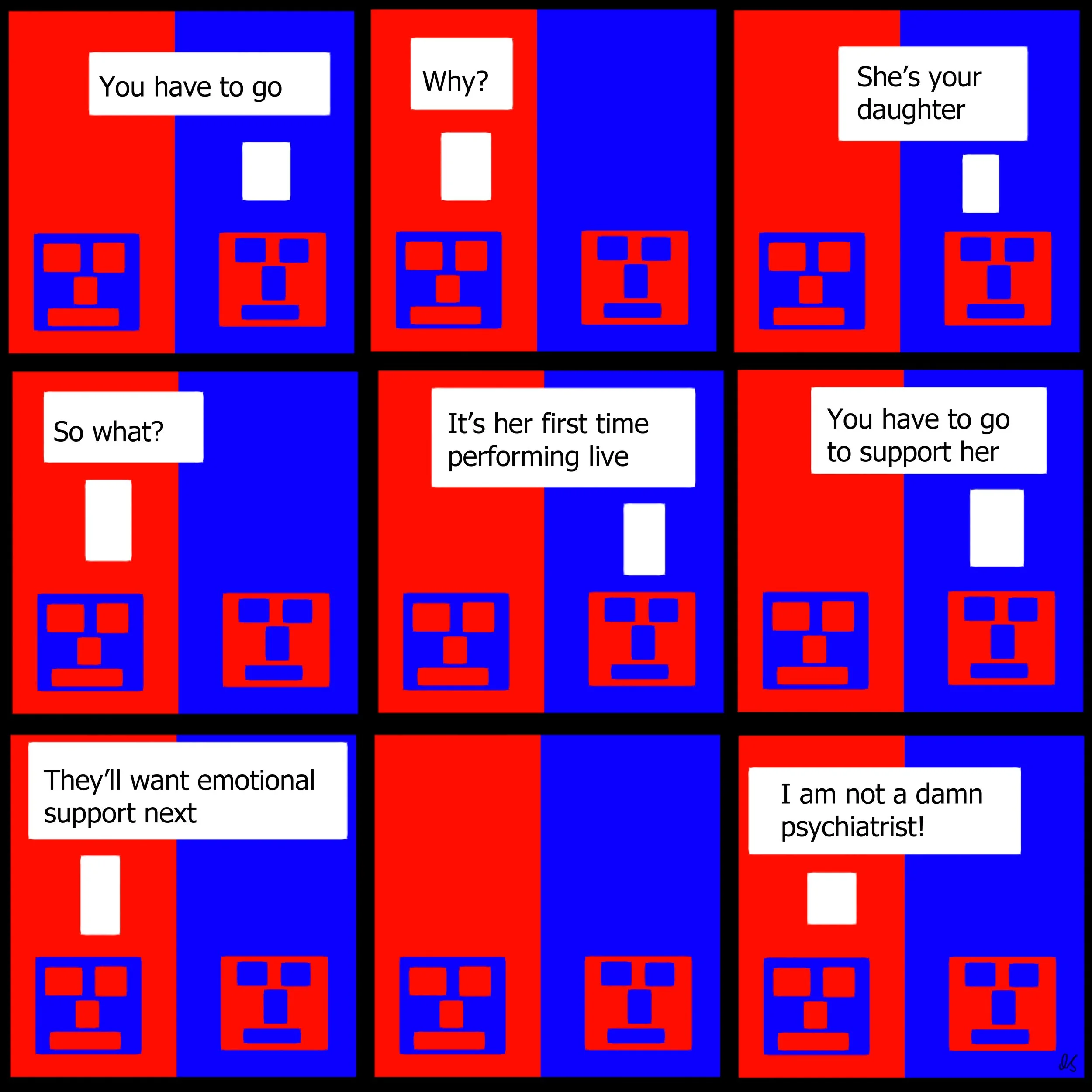
“You’ll be fine.”
“There’s so much blood.”
…
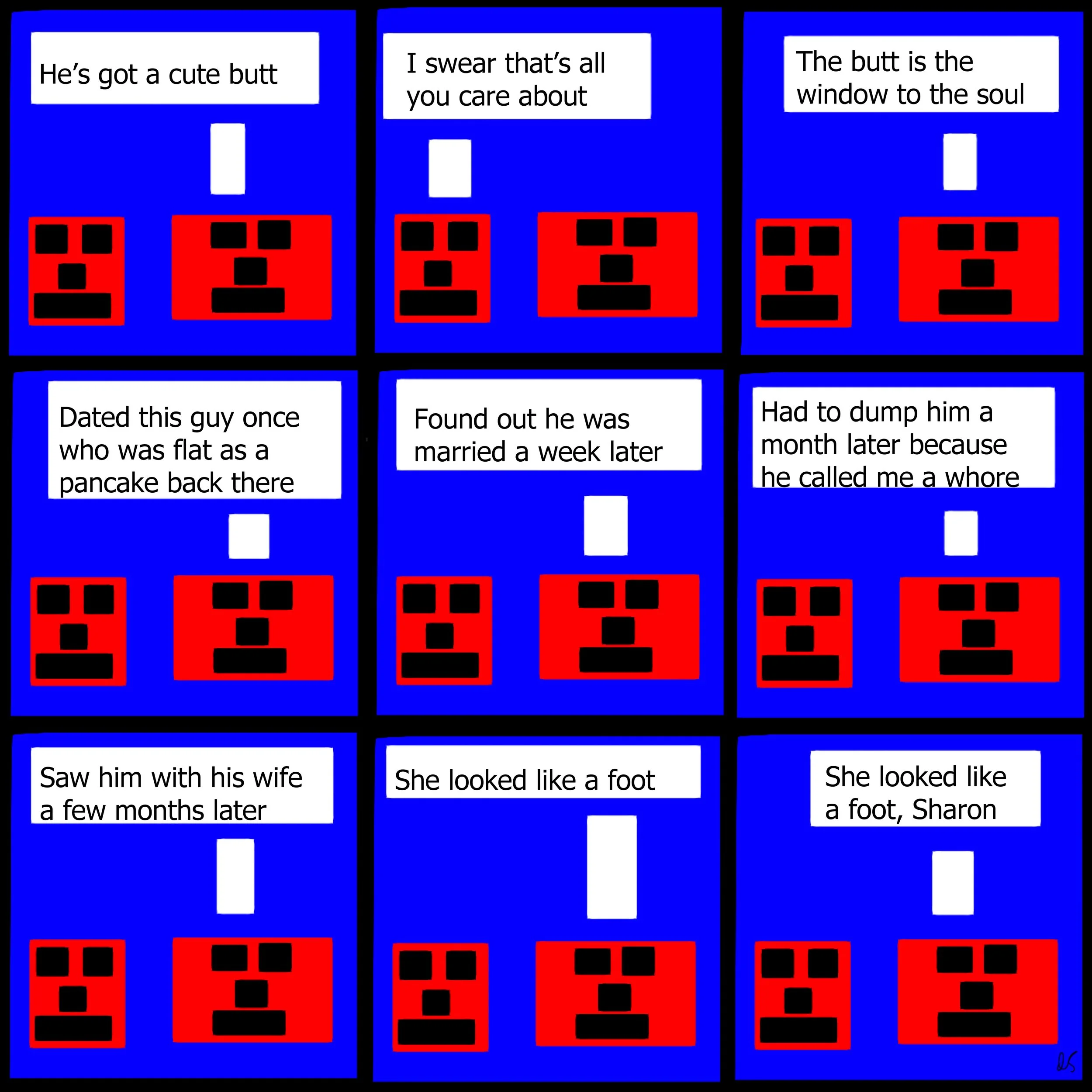
Big Boys
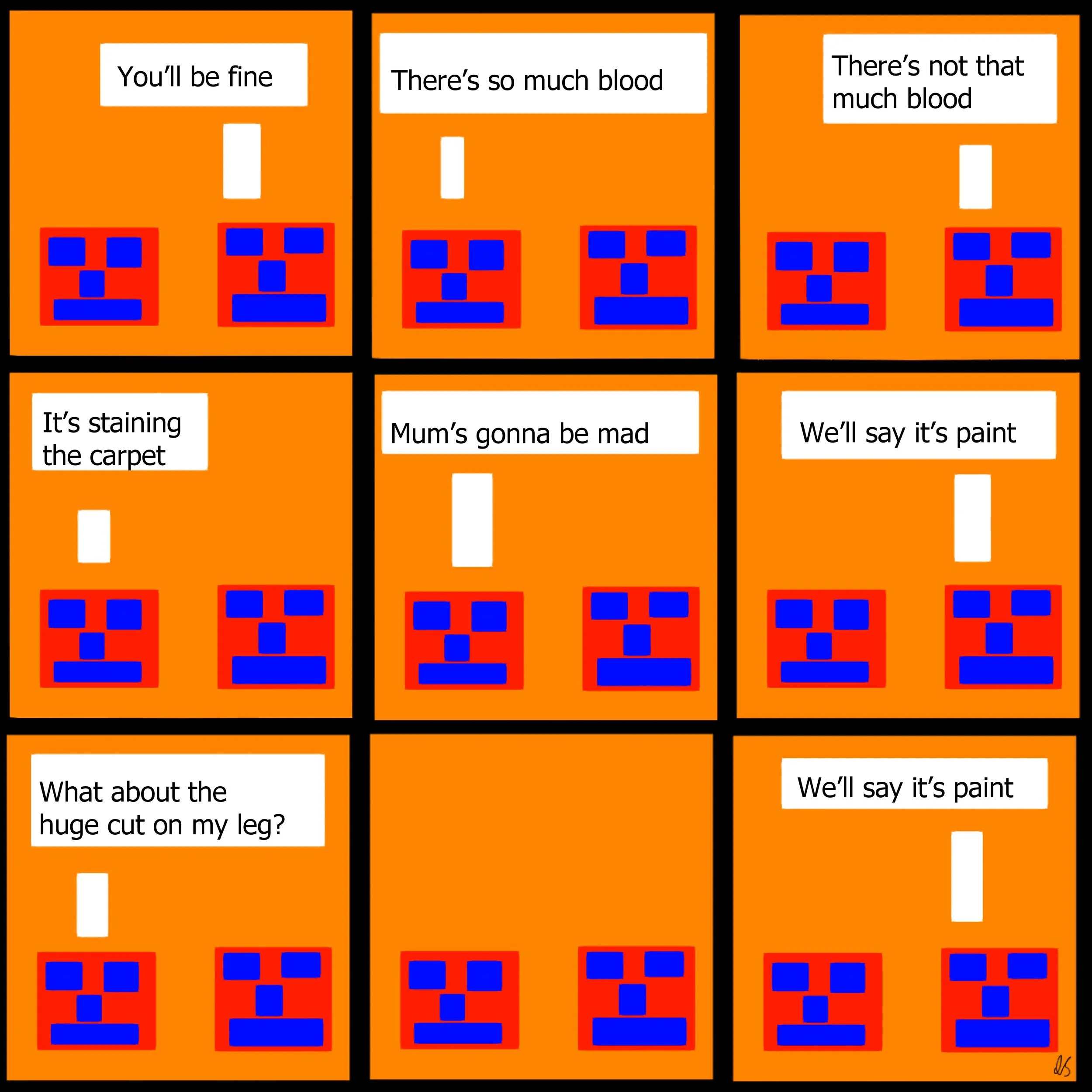
My Life
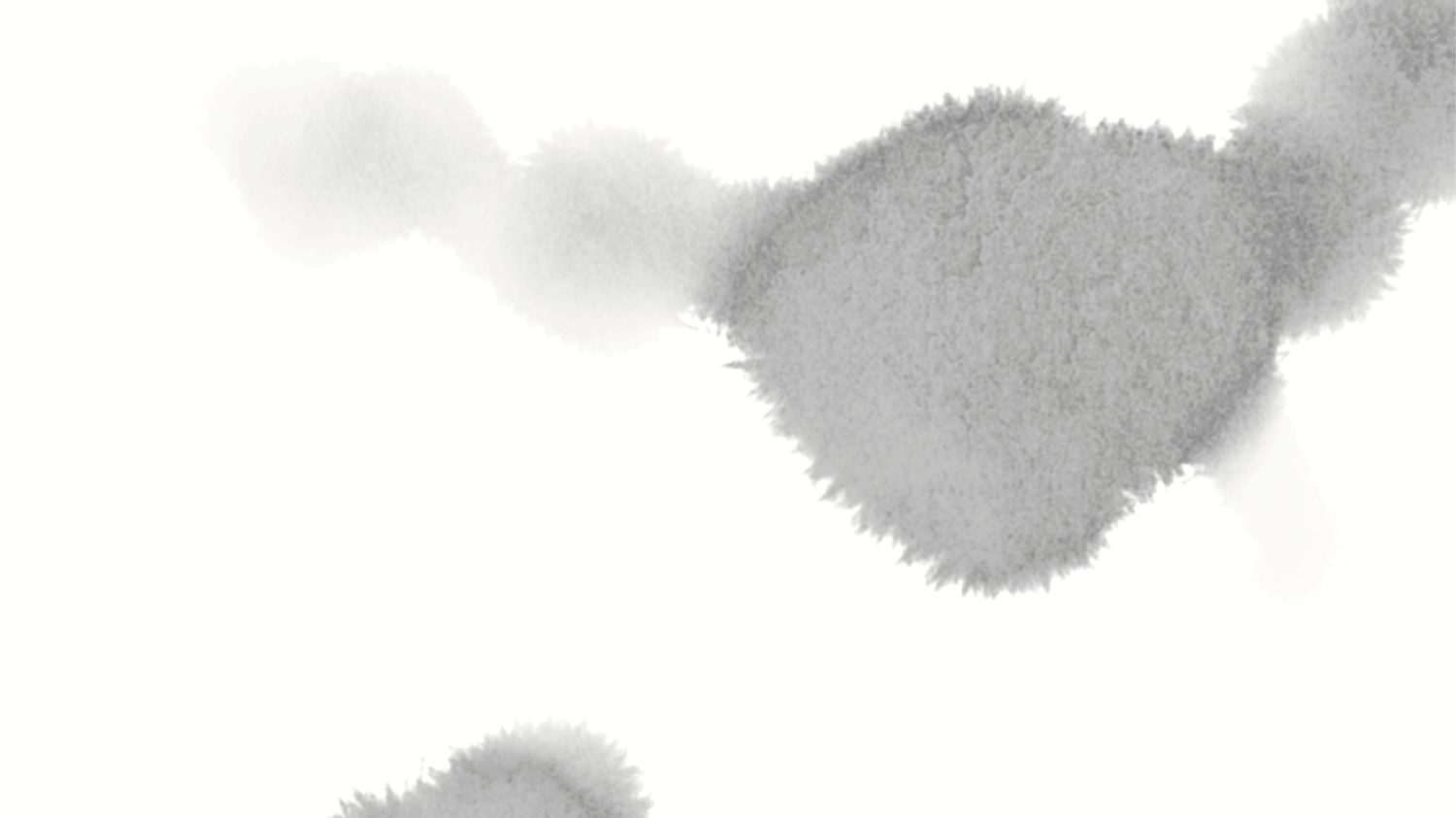
The Moon
Dominik Slusarczyk is an artist who makes everything from music to painting. He was educated at The University of Nottingham where he got a degree in biochemistry. He publishes literature, nonfiction, and visual arts. His fiction came 1st in The Cranked Anvil Short Story Competition and his poetry won The Letter Review Prize for Poetry. His full-length poetry collection, Reaction, is out now with Cyberwit.
Three from RJ Equality Ingram
They said towhead when they really meant kid in the wheelchair / Garden variety skeletons inhabit ghost towns between the carousel & the next millennium…
SEERSUCKER
They said towhead when they really meant kid in the wheelchair / Garden variety skeletons inhabit ghost towns between the carousel & the next millennium / Apples on sticks dipped in leather colored caramel & weather so nice all the golf courses closed out of respect for the amusement parks / Welcome asphalt & skinned knees to the migrant headache of too short to ride / When we dropped I spat out my gum & caught it on the way back up & I can’t believe you missed that how could you Mom? / The ice show was the same as last year & the dancers smoked menthols behind the go-karts & one of them smuggled some weed into their dorm / Penny pressers slowly going out of business / Right here is where the palmist told me where my life line ended & she was half right / When I came back the next year to show her my scar she was an entirely different woman & I too was no longer blonde & conservative / Is that skeleton climbing out of the daughter’s window or the mayor’s? / Bougainville / Fish & Chips $12 for three pieces & Tartar Sauce $2 / The animatronic skeleton steering the engine chuckles at every pedestrian crosswalk like he’s ushering around a new flock of marks / His shirt hasn’t been washed since the ride opened.
Who the hell charges for Tartar Sauce? | Turn to page 59
Help the skeleton boyfriend escape | Turn to page 60
EQUANIMITY
We carry flowers from the trunk into the hospital / We buy plane tickets & cheese curds from street vendors & paint our faces like lions & raves & a cloudless night sky / We jump between train cars while we’re still moving & when the ice cream truck drives by we get a popsicle that looks nothing like the cartoon character on the wrapper / We forget we’re bad at poker & when its our turn we forget what equanimity means but we say it anyway & hope no one notices / We skate until our knees start to hurt & read tarot cards in the bleachers to our friend’s parents & they are so good at pretending they’re interested they start to be interested / We told ourselves we were going to stop hanging swords on the wall but we did it anyway & when they ask us what we want to be buried with we say we just want something to protect us on the other side / We gave into peer pressure but said we avoided laundromats bc we got so distracted making up backstories for folks we always forgot which machine we were using / We gave up waiting for the big check to come so we lost our keys in the gym locker room / We folded napkins on Saturdays & in the back of the van we kept a torch style flashlight & I can’t tell you the number of times we needed to use it / We used it to corral the kittens back into the cardboard box we found them in / We used it to change the spare tire / We checked the mole on your back & said it was nothing / It was nothing / At least I thought it was nothing.
Ask to be buried with a sword | Turn to page 69
Ask to be buried with a torch | Turn to page 27
Don’t worry it was nothing | The End
SHORTHAND
Your Aunt Bev called & said she told everyone not to touch the bookcases until you’ve had a chance to comb through them / She says she knows what she’s looking for but she’s probably the only one & she’s probably right / The only Ingram capable of zen bc she knows when to stop looking / Your brother’s on his way with a kid on his lap & a golf club in one hand with his other on a tiller / Families shrink & grow a little bit at a time like an inchworm that’s always catching up to itself / We’ve got an earlobe in just about every state but only half of them seemed to be connected to anything that listens / Except Bev / Bev listens / Listens to the whales that dive to places you’ve never heard of just bring back stories & idle minds that listen / Maybe that’s why she knew what you were looking for when the family asked what you wanted / Grandma Helen’s Shorthand Dictionary / A book hardly bigger than a television remote with tiny folded practice pages that resembled archaic scrolls of spells you whisper to yourself to keep out the dangerous ones at night / Bev said she found the little book next to an etiquette guide & rightly assumed you would appreciate your starchy grandmother’s uptight style guide alongside the ancient Gregg / But the rest of us had no where to look.
I got to go your brother is calling | Turn to page 63
Could you call me back when you land? | The End
RJ Equality Ingram lives next to a cemetery in Portland, Oregon & works as a necromancer for Goodwill Industries of the Columbia Willamette. Their second poetry collection, Peacock Lane, is forthcoming from White Stag Publishing & their debut poetry collection, The Autobiography of Nancy Drew, was also published by White Stag in 2024. More work can be found in Deep Overstock, Luna Luna & Voicemail Poems, among others. Photographs of their cats Twyla & Senator Padme Amidala, as well as their little free library, can be found on Instagram @RJ_Equality